

Transferring a PPR is a right of every subscriber and one of the decisions with the greatest impact on their retirement. Even so, it is one of the most overlooked. Many Portuguese people keep the retirement savings plan (PPR) they signed up for at the bank counter for years—with high fees or returns below inflation—without realizing that they can transfer their savings to another product without cashing out, without paying taxes, and without losing their tax benefits.
If you've already read our article on the tax benefits of a PPR, here's the next step: make sure the PPR you have today is still the best option for you.
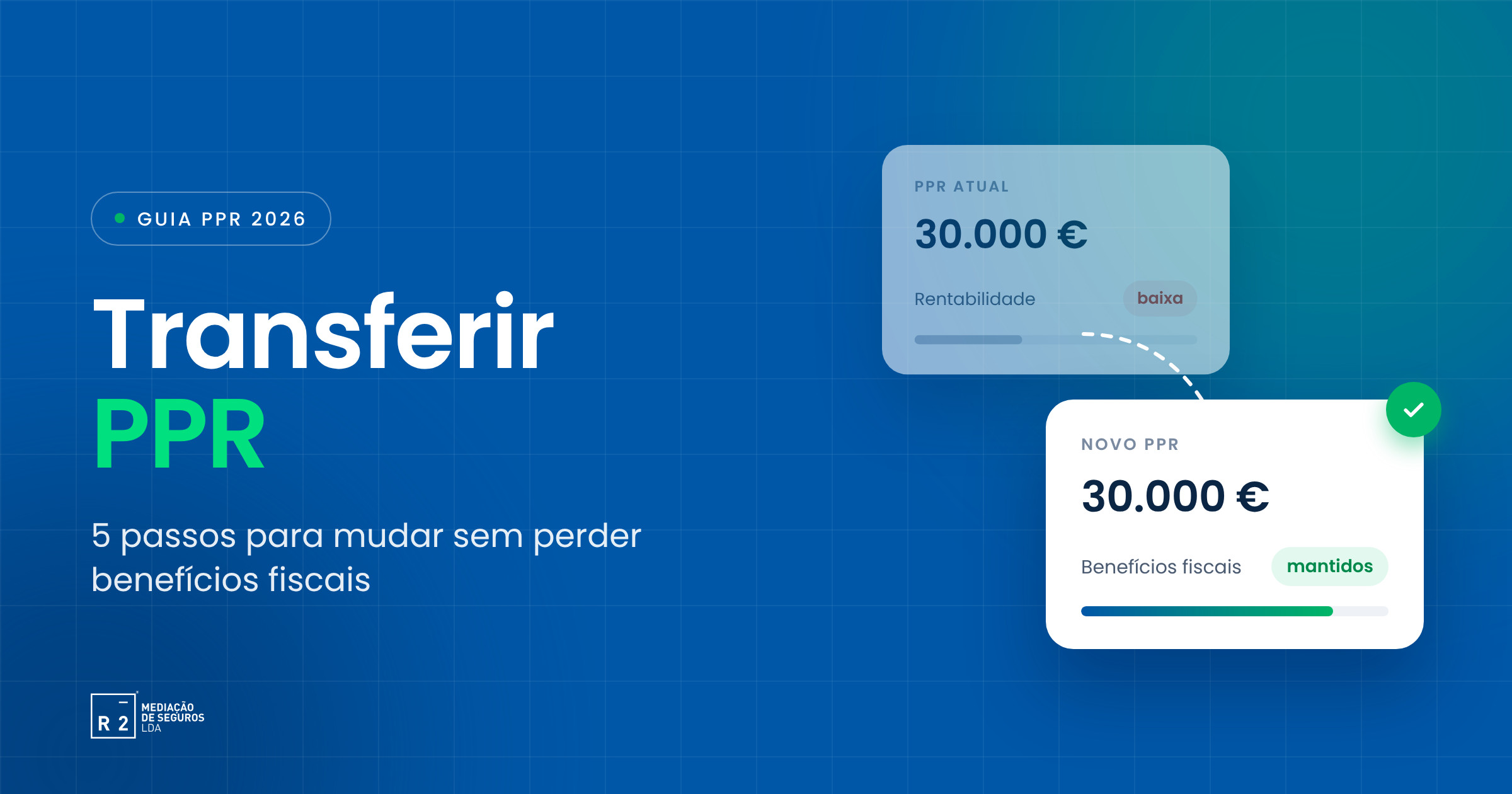
What does it mean to transfer a PPR?
Transferring a PPR means moving the accumulated balance from your Retirement Savings Plan to another PPR, either with the same provider or a different one (insurance company, investment management firm, or bank).
This isn't a withdrawal. The money never goes through your account—it goes directly from the old institution to the new one. You can transfer the entire amount or just a portion of it.
The right to transfer is provided for in the law governing PPRs, so your current provider cannot prevent it. The only exception is if your contract includes a minimum service period; therefore, it’s worth checking that clause before proceeding.
Does transferring a PPR result in the loss of tax benefits?
No. This is the most common question, and the answer is reassuring.
When you transfer your PPR, you retain:
- The income tax deductions you have already claimed;
- A history of all deliveries and their respective dates (the plan's duration);
- Access to the lower tax rate upon redemption, which depends precisely on that length of service.
You only pay tax when you withdraw the money, just as you would if you had never switched products.
4 Signs That It's Time to Transfer Your Retirement Savings Plan
1. Commissions are eating into profitability
A difference of 1 percentage point may not seem like much, but over time it adds up. A retirement savings plan (PPR) of €30,000 that grows at 4% per year will reach approximately €65,700 in 20 years. At 3% per year, it will only reach €54,200. That’s a difference of more than €11,000, without making a single additional contribution (illustrative figures).
2. Returns are below the inflation rate
If your retirement savings plan yields less than the cost of living, which rises year after year, your savings are losing purchasing power.
3. Your profile has changed
At age 30, it makes sense to take on more risk in exchange for greater growth potential. At age 55, protecting your capital becomes the priority. The right retirement savings plan today may not be the same as it was ten years ago.
4. You have several retirement savings plans that are scattered or not being monitored
It's common to have two or three plans with different providers, with no one keeping track of them. Combining them into a single product simplifies management and makes it easier to keep track of them.
When You Should Not Transfer Your PPR
Transferring isn't always the best decision. Think twice if:
- Your old retirement savings plan has a high guaranteed minimum rate. Some contracts taken out when interest rates were high guarantee returns that are hard to find today.
- The transfer fee offsets the profit. If the new product yields only slightly more, the cost of the switch may not be worth it.
- It's very close to the redemption date. With little time left, the difference in yield has less room to make a difference.
That is why the comparison must be made on a case-by-case basis, using concrete figures.
How much does it cost to transfer a PPR?
It depends on the type of retirement savings plan you have:
- Non-guaranteed retirement savings plans (PPR funds): The law prohibits the charging of transfer fees.
- Capital-guaranteed retirement savings plans (PPR insurance): A commission may apply, but it never exceeds 0.5% of the transferred amount. For a €20,000 retirement savings plan, the maximum commission is €100.
Review the terms and conditions of your plan and also check the subscription and management fees for the new product. The goal is for the switch to pay off within a few years.
How to Transfer a PPR in 5 Steps
1. Review your current retirement savings plan
Request your most recent statement and the terms of the contract. Check the accumulated balance, the fees, the returns over the past few years, whether the principal is guaranteed, and if there is a minimum holding period.
2. Compare alternatives
ASF provides a platform for comparing retirement savings plans (PPR), which is useful for an initial analysis. An insurance broker goes a step further: they compare products from various insurance companies based on your profile, age, and goals.
3. Sign up for the new retirement savings plan and request the transfer
You submit the request to the new financial institution using a form or transfer letter, indicating whether you want to transfer the entire amount or just a portion of it. You don't need to close any accounts or visit your old bank: the new financial institution will handle the process.
4. Receive confirmation of the amount
The former employer has five business days to report the amount accumulated in the PPR as of the transfer date, after deducting any applicable fees.
5. Confirm that the transfer is complete
The process is usually completed in about ten business days. On the first statement from the new PPR, verify that the amount and delivery history have been transferred correctly.
Transferring a PPR Through a Broker: Why It Makes a Difference
A bank shows you the retirement savings plans it sells. A financial advisor shows you the market.
At R2 Seguros, we work with more than 25 insurance companies, including Generali Tranquilidade, Allianz, and Fidelidade. We analyze your current retirement savings plan, compare alternatives using actual figures, and tell you honestly whether or not it’s worth switching. If it is, we’ll handle the transfer process with you, from start to finish.
Just as when you decide to transfer your mortgage life insurance, the law is on your side. You just have to exercise that right.
Learn more about our savings and protection solutions for individuals. For official information about insurance products and your rights as a consumer, please visit the website of the ASF—the Insurance and Pension Funds Supervisory Authority.
Frequently Asked Questions About Transferring a PPR
Can I transfer only a portion of my PPR?
Yes. The transfer can be either full or partial.
Can the bank refuse the transfer?
No. Portability is a right of the subscriber. The contract may only specify a minimum service period.
Can I transfer a PPR fund to a PPR insurance policy?
Generally speaking, yes. The law allows transfers between different types of retirement savings plans, but you should verify the terms of the receiving plan.
Do I have to pay income tax when I transfer my retirement savings plan (PPR)?
No. The transfer is not a withdrawal. The tax is only calculated when you withdraw the money.
How many times can I transfer my PPR?
As many as you like. Just keep in mind that, for capital-guaranteed retirement savings plans (PPRs), each transfer may incur a fee of up to 0.5%.
Conclusion
A PPR is a long-term commitment, but it doesn’t have to be a commitment to the same product forever. Transferring your PPR allows you to pay lower fees, seek better returns, and adjust your risk level to your stage of life—without losing a single euro in tax benefits.
Want to know if your retirement savings plan is still the best fit for you? Talk to us, and we'll go over it with you.