
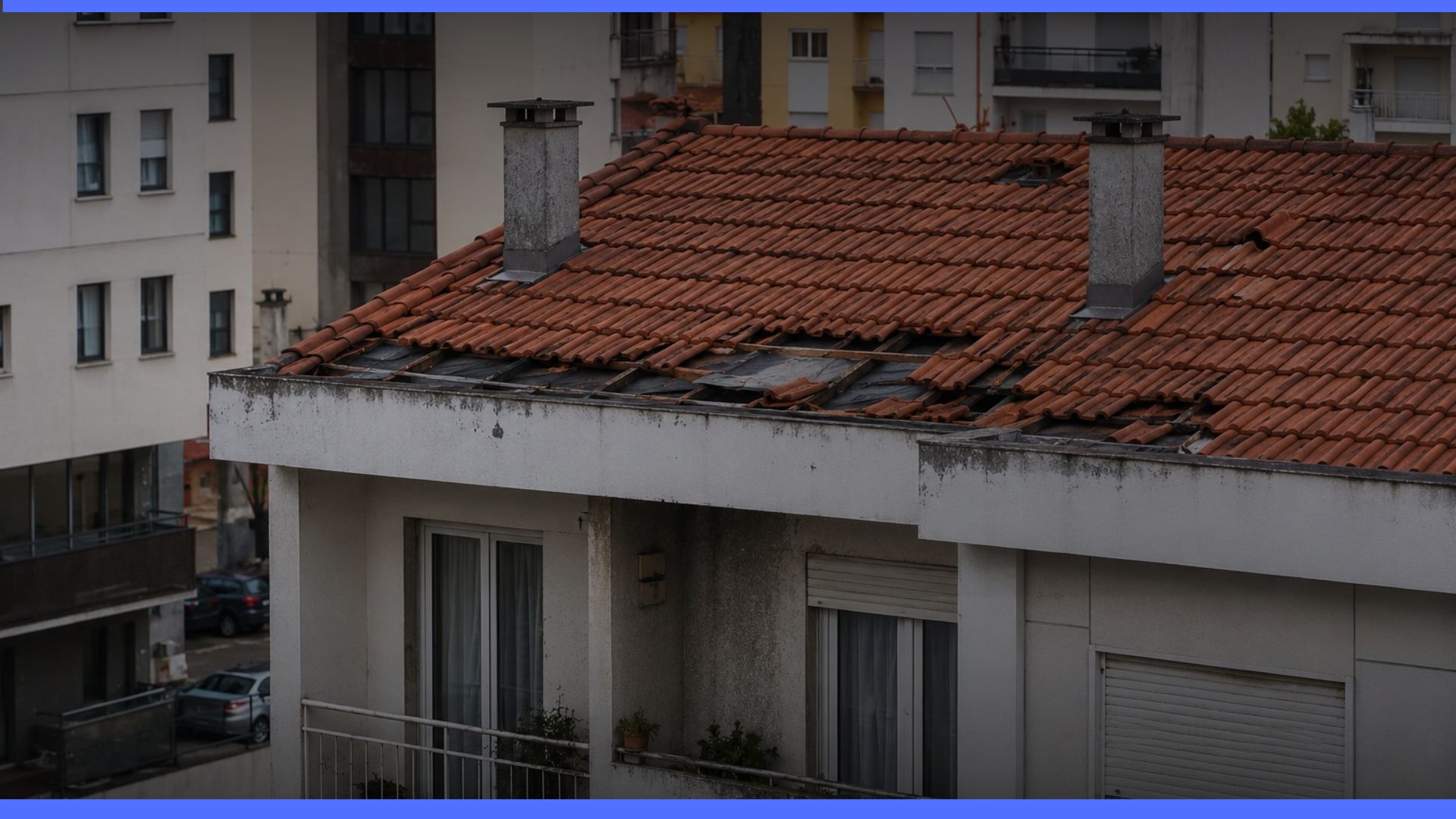
Case Study: Storm at a Condominium – How Does Insurance Work, and Who Pays for the Damage?

“There was an claim my building following a storm. Water seeped in through the roof and damaged my neighbor’s apartment on the top floor. Everyone has their own insurance; they’re individual policies.”
1. Who should file an insurance claim—the neighbor, or everyone?
As for the damage to the neighbor’s house, her individual homeowners insurance policy should already be filed, since the storm is not covered under liability insurance, and her policy (if it includes storm coverage) will cover the damage sustained.
Settlement of claims for damages caused by storms (or other natural phenomena) is, in fact,only applies to property insured under the policy. In other words, the unit’s policy covers the property. The policy is only liable for damage caused to the insured property—the unit. In this specific case, any repairs to damage sustained by the unit (or units) must be covered by the individual policy, also under the Storms coverage.
Each individual policy will cover the item it insures: the fraction.
Based on civil liability, and in this specific case, within the specific context of the Tempestade, there is no way to hold the other co-owners liable.
The activation of the Civil Liability in any policy (whether multi-risk, professional, family, or auto…) presupposes, in accordance with the legal definition, an act or omission on the part of the liable party.
Civil liability is the obligation to compensate for property damage and/or non-property damage caused to third parties as a result of acts, omissions, or activities for which a person is legally responsible.
The general principles of civil liability are:
- Fact—an action or omission.
- Unlawfulness – a violation of a right or a legal norm.
- Fault, intent, or negligence on the part of the agent.
- Damages – loss suffered by the victim.
- Causal link – the connection between the event and the damage
2. What about the broken roof tiles? Who should file an insurance claim—the neighbor, or everyone?
The roof is a common area. Therefore, to repair the roof tiles, everyone must file a claim under their individual policies, the combined coverage of which will cover 100% of the cost of replacing the roof. Each individual policy covers the portion corresponding to the unit.
3. What law applies in this case and justifies these explanations?
The prerequisites and definition of civil liability are derived from the combined provisions of Articles 483,
487th, 562nd and 563 of the Civil Code.
As for the common areas, they are defined in Article 1421 of the Civil Code, which provides that they are common, unless otherwise specified in the articles of incorporation when permitted by law:
- the ground and the foundations;
- columns, pillars, load-bearing walls, and other structural elements;
- the roof or rooftop terraces, even if intended for use by any unit;
- entrances, lobbies, stairways, and hallways used by the general public or as passageways;
- the courtyards and gardens attached to the building;
- the elevators;
- the general water, electricity, gas, heating, air conditioning, communications, and other systems intended for common use.
The Article 1424 sets forth the rule regarding who bears the costs of maintaining and using the common areas of a condominium. The current wording (as amended by Law No. 8/2022, of January 10). The key point to take away from this article is the principle that all co-owners must contribute to the expenses of the common areas in proportion to the value of their unit.
Storm damage to condominiums often raises questions about who should file an insurance claim. The answer depends on the nature of the damage, the coverage purchased, and the distinction between individual units.
If you have any questions , please contact us. We're here to help.